
A Private Lake and Golf Community in Cooke County
Custom Home Building in Lake Kiowa, Texas
A private 1,700-acre community in southeastern Cooke County. A 563-acre lake at its center. An 18-hole championship course established in 1969. A builder of covenanted homes since 1999.
The Community
Lake Kiowa —
Established Since 1969
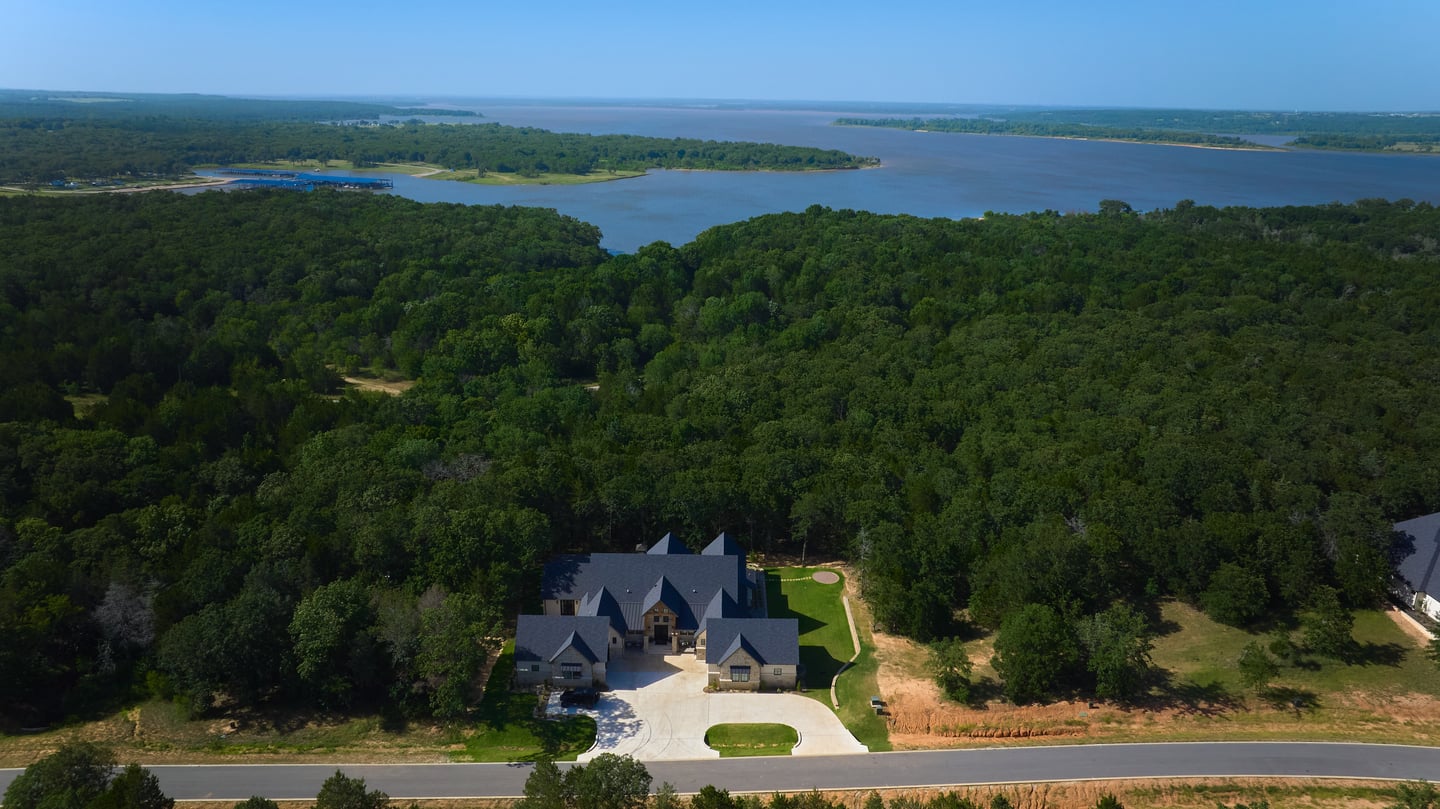
Lake Kiowa is a private, gated community in southeastern Cooke County, Texas, organized around its namesake 563-acre lake. The community was established in 1969 when Indian Creek was dammed to create the lake, and the championship golf course — designed by Leon Howard on what had historically been a Kiowa Indian camp site — opened for play later the same year. The Lake Kiowa Property Owners Association, the community’s governing body, was incorporated under the Texas Non-Profit Corporation Act and has operated continuously since.
The community covers 1,700 acres in total. Its boundaries are perimeter-fenced and gated at the front entrance, with private security maintaining the gates, patrolling the lake and grounds, and enforcing community rules. Approximately twenty-one miles of paved roads loop through the community — Kiowa Drive, the main road, traces the lake’s shoreline and crosses the dam. The lake is approximately two miles long, with a maximum depth of thirty-five feet and almost nine miles of shoreline. Indian Creek and numerous springs feed it.
The community’s character is distinct. It is not a new development — it has been an established place for more than fifty-five years. It is not a public lakefront subdivision — it is fully gated, with access restricted to property owners and their guests. It is not a single-purpose subdivision — it is a complete community with country-club amenities, organized social life, internal infrastructure, and the kind of covenant framework that comes with mature POA governance. Lot owners are automatically members of the LKPOA. A nine-member elected board governs the community on three-year offset terms.
“Fifty-five years of community before the home is built. Several decades after, still.”
— Scott Bates
The Lake
The Lake at the Center
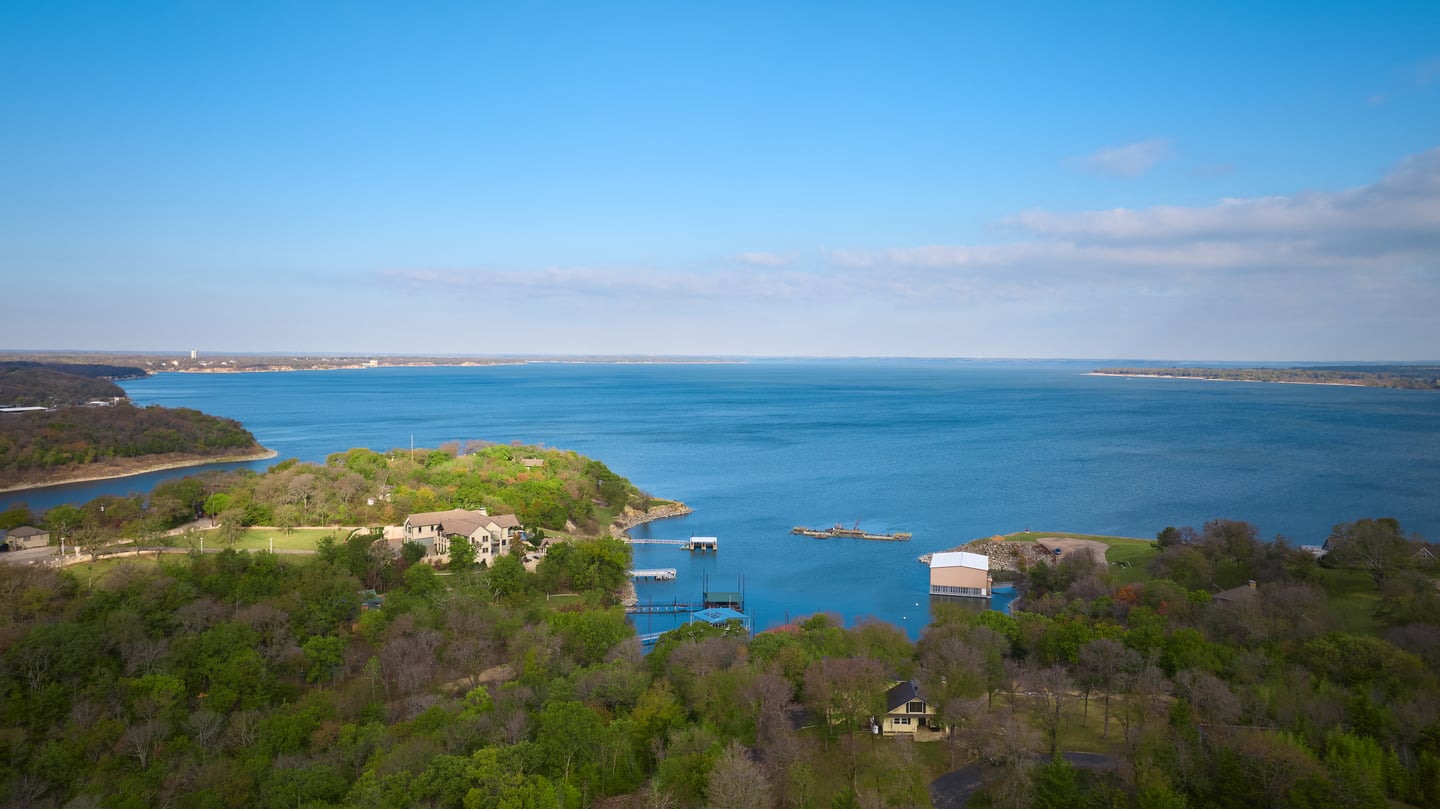
The lake defines the community. Five hundred sixty-three acres of water at its center, approximately two miles long, with two designated beach areas — East Beach and the main beach — and multiple private boat launches around the shoreline. The Lake Kiowa Anglers and Conservation Club maintains the small and large fishing areas; bass, crappie, and catfish populate the water year-round. Permitted boating is broad — motorized boats, jet skis, water skiing, and tubing are all allowed, though wake boats must disable their ballast systems to prevent damage to private docks and sea walls. Houseboats are not permitted.
The lake is not a Lake Texoma. It is meaningfully smaller, fully contained within community boundaries, and operated under specific LKPOA rules that protect both the recreational use and the shoreline character. For the Legacy Steward who has considered Lake Texoma and chosen Lake Kiowa, the trade-off is intentional: smaller scale and more contained, in exchange for fully private access, a single point of governance, and a consistency of community character that the larger lake cannot offer.
0+
Total Community Acres
0+
Private Lake Acres
0
Miles of Shoreline
0
Championship Golf Holes
0
Dam & Course Established
“A private lake. A measured community. The numbers describe both.”
— Scott Bates
The Social Anchor
The Country Club and the Lodge
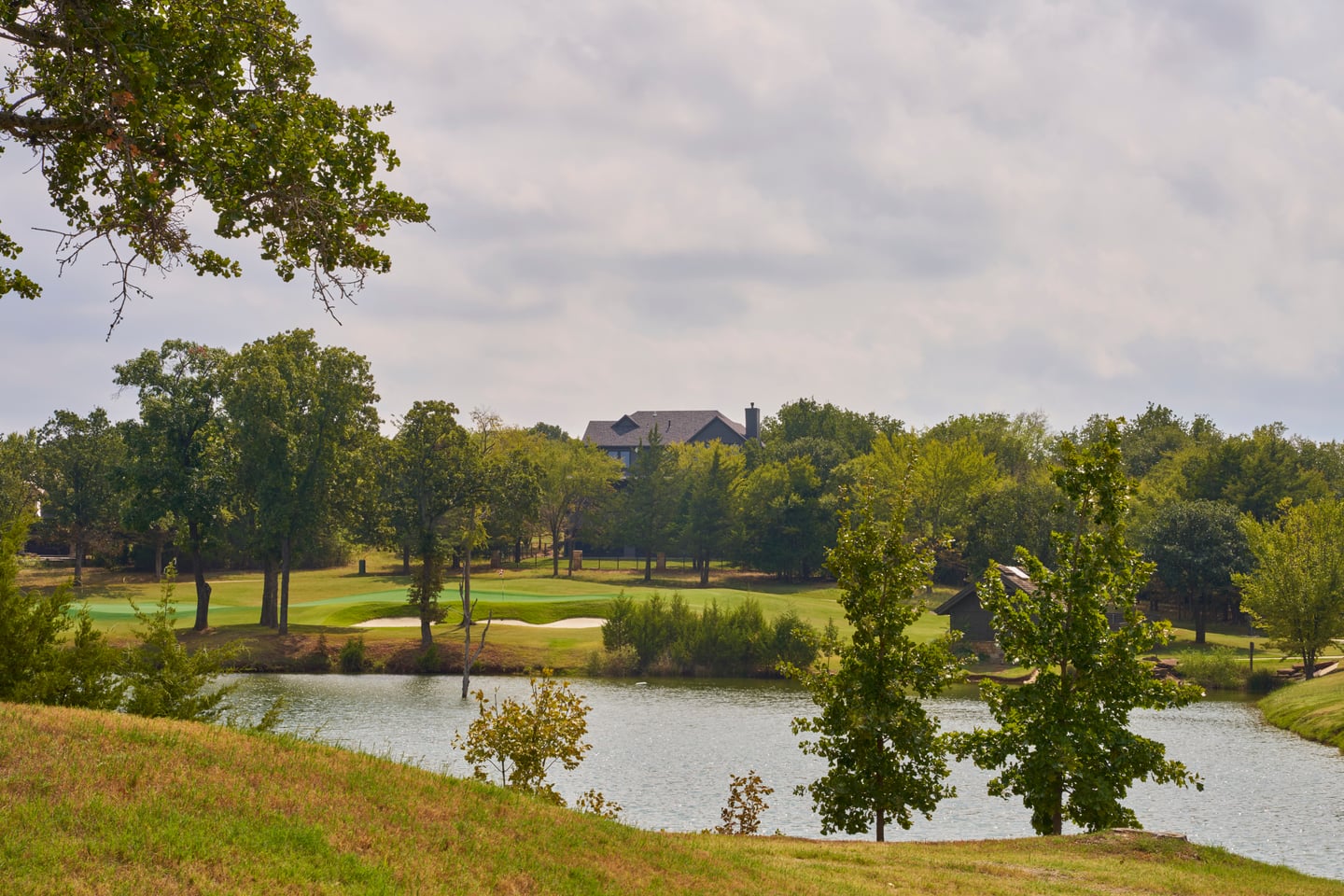
The Lake Kiowa golf course was built in 1969 by Leon Howard, on land that had been a Kiowa Indian camp site before the community was developed. It is a private, eighteen-hole, par-72 championship course, stretching approximately 6,605 yards across the rolling Cooke County terrain. The fairways wind through homes along the community’s interior, with the lake and two interior ponds in play on more than half the holes. Course rating 72.7; slope 132. The course has been continuously maintained by the LKPOA since opening and is one of the well-regarded private courses in north Texas.
Beyond the course, the Lodge is the social anchor. Restaurant and bar service is available to members, with a patio overlooking the water and a new state-of-the-art pavilion for larger gatherings. Annual events include the Fishing Derby, the Independence Day Boat Parade, golf tournaments through the season, holiday dinners and dances, and the social club rotation that includes pickleball, gardening, bridge, and various other organized activities. The Lodge defines the community’s social calendar in ways that the Lake Texoma communities and the smaller covenanted developments cannot match.
For the Legacy Steward, the country club and Lodge are not amenities — they are integral to what Lake Kiowa actually is. The buyer who chooses Lake Kiowa is choosing the community life that the Lodge enables. The home is the residence; the Lodge is where much of the social life happens. The two work together.
“The Lodge is not an amenity. It is the social center of the place.”
— Scott Bates
The Three Positions
Where the Home Sits Within Lake Kiowa
A home in Lake Kiowa typically sits in one of three positions, and the choice meaningfully shapes both the design opportunity and the buyer’s experience of the community.
Lakefront homes line the shoreline along Kiowa Drive and its branches. These properties have direct water access, private docks, and the kind of horizon orientation that organizes the entire home plan. Floor plans typically open outward to the lake. Outdoor living spaces — patios, screened porches, dock structures — become as consequential as the indoor program. The lakefront homes tend to be the most visible from the water and so attract the most attention to architectural detail.
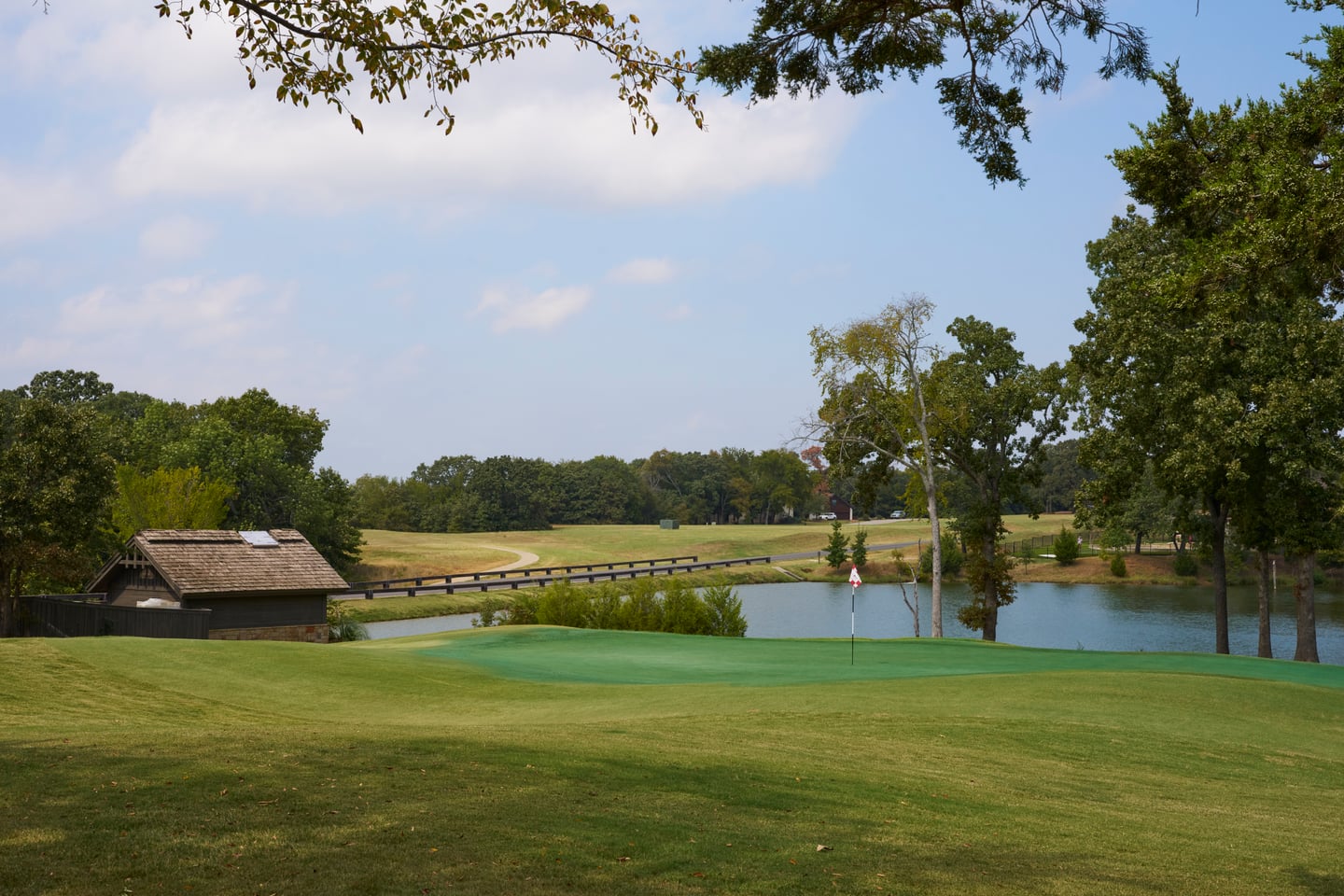
Golf course homes line the fairways of the eighteen-hole course. These properties have direct course frontage, with views of fairways and greens rather than water. Floor plans typically orient toward the course view, with primary living spaces and outdoor terraces positioned to take advantage of the morning light and the manicured green expanse. The trade-off is the visible activity of course play — for some buyers, this is an animating presence; for others, it requires careful site placement and screening.
Interior homes occupy the residential pockets between the lakefront and the course. These properties offer the community lifestyle — the gates, the amenities, the social access — without lake or course frontage. The lots tend to be larger. The privacy tends to be greater. The architectural freedom is meaningfully higher because the home is not designed around an external view. For the buyer who values the community character but not necessarily the constant water or course view, the interior position is the right choice.
The architectural review committee of the LKPOA reviews all new construction plans before building begins. The covenants govern materials, massing, setbacks, and the broader architectural character expected within the community. The discipline required to build well within these covenants is real — and is the same discipline we have applied to covenanted communities throughout the region.
“Three positions. One community. Each carries its own design conversation.”
— Scott Bates
The Credential
Building Within a Covenanted Community
Lake Kiowa’s covenant structure is one of the more developed in our service area. The LKPOA’s architectural review committee, the deed restrictions, and the rules and policies approved by the Board of Directors collectively govern what can be built, how it can be built, and the relationship of each home to the broader community character. For the buyer entering Lake Kiowa, the covenants are not obstacles to design — they are the framework within which good design happens.
Our most direct experience with this kind of community is Rock Creek in Gordonville — a covenanted community on the Texas side of Lake Texoma where covenant compliance, architectural review, and construction discipline are fundamental to how the work is done. We have been working within Rock Creek’s covenant framework for years; the operational rhythm of submitting plans for review, designing for review committee approval, and building to the specifications of a governed community is part of how our team operates. Lake Kiowa’s LKPOA covenants are different in their specifics from Rock Creek’s, but the discipline required is the same.
For the Legacy Steward at Lake Kiowa, this means three things. First: we know how to read the LKPOA covenants and design within them from the start, rather than discovering the constraints after design is underway. Second: we have a process for working with architectural review committees that respects their authority while protecting the buyer’s design intent. Third: we have crews and subcontractors who have built within covenanted communities before and understand the on-site discipline that gated POA communities require.
“The covenants are not obstacles to design. They are the framework within which good design happens.”
— Scott Bates
The Network
Connected to the Surrounding Region
Lake Kiowa sits in the southeastern corner of Cooke County, ten miles southeast of Gainesville and about an hour north of the Dallas metroplex. The communities and lakes our team works across this corridor share a single process and a single standard.
A 563-acre lake.
An 18-hole championship course.
An established community since 1969 — served by a builder of covenanted homes since 1999.
Building in Lake Kiowa Begins with a Conversation
Whether you are evaluating a lakefront lot, a golf-course position, or one of the interior pockets within the community — and whether you are early in researching Lake Kiowa or have already begun the LKPOA membership process — the first step is the same. A conversation about what you have in mind and how our team can serve it within the covenant framework that defines the place.
Begin a ConversationExplore our process →Not sure if we are the right fit? →